Background on Provision of walking and cycling by the UN Global Road Safety Week
The week of May 12-18 2025 marked a major milestone for the UN global road safety campaign, with its 8th campaign titled “Streets for Life – Make Walking Safe and Make Cycling Safe”. This campaign aimed at highlighting how important it is to consider and protect all vulnerable road users, such as pedestrians and cyclists, in road infrastructure designs and speed limit allocation within our environments.
Reviewing the global statistics on road traffic deaths, it is realised that in every 4 road deaths, at least 1 pedestrian or cyclist is a possibly listed victim. This does not just increase the severity of unsafe infrastructure, but in many other instances accounts for the leading rates of disabled persons and youths within our communities. It is worth noting that young people aged 5 to 29 years old feature prominently in crash statistics.
Amongst the many organizations that continuously advocate for youth voices, EDISE Mobility vzw, a Belgium based not-for-profit organisation, focused on improving equitable development for all user groups, with several of its thematic areas aligned on infrastructure developments, health and safety as well as sustainability, joined actively in this year’s campaign by engaging with diverse user groups and stakeholders, to understand the perspective of youths, parents and children on the sustainability of cycling and walking infrastructure in some cities in Belgium. To this, the team embarked on communication and survey campaigns about how important it is to consider and prioritize safer walking and cycling infrastructures within the cities of Gent, Merelbeke, Wondelgem and other cities.
EDISE Mobility Campaign Overview
In a bid to engage the community, EDISE Mobility conducted several outreach activities. This included speaking to church communities, Basic schools and higher education Institutes, and also public on-the-street engagements.
An opportunity to talk to the international community of Gent at the Kristus Koningen Kerk after church service was accorded to the team, to sensitize on the importance of adopting walking and cycling habits for several health and sustainability benefits, and at the same time engaging in a survey to understand several aspects of their active mobility choices and behaviours. For this group of stakeholders, the survey was primarily conducted in English.

Furthermore, the team also engaged with another group of stakeholders from the Basis School Centrum Merelbeke, in collaboration with the school director who gladly supported the campaign’s vision by sharing the survey with the teacher and parents community, and also allowed the opportunity for the team to speak with respondents after school closing hours. This survey was primarily conducted in the Dutch.

With these 2 major categories of persons engaged, the team further shared the survey campaign through various social media platforms and open street interactions in several other cities including,Aalst, Antwerpen, Evergem, Hasselt, Wondelgem.
Survey Data Analysis
The data collected was analyzed in 3 main categories covering the 19 questions provided in the survey. These categories grouped in below explanations cover the topics of respondent category and diversity, walking and cycling habits and infrastructure safety.
Respondent category and diversity
Reviewing a total of about 85 responses in both Dutch and English speaking reports with more than 50% reflected in the Flemish survey, the age group categorisation of respondents reflects mostly people between the ages of 25-50 years. This overview will be further aligned to the various cycling habits and frequencies of both male and female respondents.

Understanding the gender balance of respondents was also of major concerns, which later provides more insights on different active mobility habit challenges of people within these cities. The responses in the English language, representing about 33% of total survey, showed a 46% female and 54% male respondents. On the other hand, the Flemish respondents had a massive gap between female to male respondents with 67% female to 33%male. It is interesting to note that, a match on the age group respondents to gender reflected that female respondents were majority of the major age group of 25 -50 years old respondents.
Walking and Cycling Habits.
Another key aspect for the campaign was to understand the walking and cycling habits of respondents in both Flemish and English respondent groups and communities. The results showed that about 50% of respondents in the English communities cultivate a habit of walking and cycling to school, work and personal communities in general. On the other hand, about 72% of the respondents to the Flemish survey incorporate a cycling habit, while only about 28% were more focused on walking.
On a more indepth assessment, it is seen that in terms of daily commutes, there is an almost balanced response for both communities in walking habits. 30% of respondents walk daily to trips and about 24% on 2-3 times weekly basis. For cycling, a vast gap is observed from both communities. While most of the English speaking respondents do not cycle, about 22% do engage in 2-3 times weekly cycling habits. In the Flemish communities, about 33% of respondents cycle on a daily basis, and about 24% 4-5 times a week.
In Summary to the walking and cycling Habits of respondents, it was remarked that most people are more likely to cycle in both communities than walking. Also, it is worth noting that most of the people who cycle/walk are within the age group of 25-35 in the English communities, mostly male, while for the Flemish respondents, we see mostly 35-50, with mostly female.
It is worth pondering as to whether there would be a specific constraint that explains this difference in behaviours. Though about 70% of respondents highlighted that they do not envisage any constraints, some possible reasons provided by respondents included: lack of suitable bicycles, poor roads, unfavourable weather, poor infrastructure, lack of respect for or understanding of traffic lights, narrow cycle paths, poor road markings, long cycle distances, to name a few.
Dutch survey respondents indicated that: road works and dangerous intersections could pose safety risks, vegetation on the road sway is not cleared in time, many bumps on the road, broken glass on bike paths and loading and unloading of vehicles on cycle paths as a risk, suggested bike paths not being actual cycle paths pose a great risk, and car drivers not taking cyclists into account.
Infrastructure Safety
Respondents were asked to share their location as well and their self-perception of safety when walking and cycling.
Merelbeke-Melle
Of the Dutch speaking respondents from Merelbeke-Melle 39% indicated they did feel safe while 43% responded they did not. The rest of these respondents indicated it was not applicable to them. All these respondents also stated they were parents. It is interesting to note that 70% of the respondents also indicated that they did not find infrastructure safe for their children to walk and cycle in.
When asked to elaborate on safety concerns, respondents mentioned some streets and parking areas as unsafe locations. Respondents also indicated that speed is a road safety concern, there are narrow and poorly maintained cycle paths on a few named streets highlighting the need for better and segregated crossing paths for cyclists and pedestrians.
Ghent
Among the Dutch speaking respondents from Ghent, 39% responded that they found cycling and walking infrastructure to be safe. Most of the respondents (74%) are parents, 35% of which find walking and cycling infrastructure to be safe for their children. Some proposals on how to improve cycling infrastructure included the need for wider cycle lanes, clear separation of cyclists from vehicle traffic.
69% of the English speaking respondents highlighted that they felt the walking and cycling infrastructure was safe while a minority 15% responded otherwise. It is worth mentioning that majority of these respondents (85%) stated they are not parents. Of the respondents with children (15%), it is stated that the infrastructure doesn’t feel safe enough for their children. When asked for additional comments, these respondents indicated that safe zones were needed for cyclists and pedestrians.
Other Locations (Wondelgem, Evergem, Aalst..)
Among Dutch speaking respondents whose specific city was not provided, only 33% feel walking and cycling infrastructure is safe. Of those, 67% are parents and only 33% of parents feel that the infrastructure is safe for their children to walk and cycle. They proposed improvements to infrastructure such as widening walking and cycling paths.
Of the English speaking respondents who did not indicate Ghent or Merelbeke-Melle as their city, 64% indicated they felt the walking and cycling infrastructure was safe. Of this group of respondents, more than half mentioned that they felt the infrastructure is also safe for their children. These respondents highlighted the need for more segregated walking and cycle paths particularly in locations of high speeds and shared road lanes between cyclists and pedestrians.
In conclusion on the infrastructure safety, it is remarked that, though the communities continuously strive towards implementing the usage of more active modes in their day to day commutes, there is increasing need and demand from the population for safer and more user-friendly cycling and walking infrastructures in all respondent locations, especially for children protection and safety, with limited or no vehicle and cyclist shared lanes.
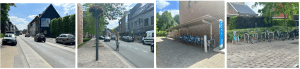
The lack of segregated cycle paths is likely to be contributing to cyclists’ feeling of unsafety particularly where there vehicles are driving at speed limit. It is also good to see that the city support bike infrastructure by providing shared bugs as well as public parking spots for cyclists.
SUMMARY CONCLUSION : 8th UN Global Road Safety Campaign
The results of this survey remain a long-lasting base for the many discussion, research activities, policy report and recommendations planned by the EDISE mobility team, not just to address the needs of children, youths, women, people with disability and also including people with immigrant backgrounds in the areas of infrastructure, health, environmental sustainability and technology demands in Belgium and abroad, but also to contribute massively in Championing equitable development for All.
A key milestone for user acceptance studies in growing technology support tools for infrastructure safety in this survey was the high acceptance of respondents in contributing their voices to the many echoes on increasing road safety and reducing road death through existing outreach services, like making use of the WALK 21 app. This tool has served as very instrumental in guiding people’s walking habits and also showing the associated health benefits in this active transport mode.
As the EDISE Mobility team wraps up this survey, a next milestone that arises is the social integration of road users in policy dialogues and discussion, especially youths, addressing the growing societal demands for more safe and sustainable environments for All.
The End