Youth Engagement in SDGs: Voices from Europe
The EYE 4 SDGs project is a cross-continental initiative empowering youth in Uganda, Kenya, and Belgium to engage in policy advocacy and influence SDG implementation.
It aims to assess existing gaps in achieving the Sustainable Development Goals (SDGs) while identifying entry points for youth to engage meaningfully with policymakers and influence policy development.
As part of this project, EDISE Mobility vzw, a Belgium based youth-led organisation and technical coordinator of the EYE4SDGs project, organized an online Youth focus group discussion on 7th November 2025, bringing together (marginalized) youth to discuss and enrich the project’s understanding of the lived experiences of youth. The session addressed Meaningful youth engagement in the development and implementation of the SDGs, combining storytelling, interactive exercises, and open dialogue on existing policies and the SDGs, to explore how young people experience and contribute to the SDGs in their daily lives.
Youth Perspective
Participants indicated that Belgium supports the needs of vulnerable and marginalised groups through the provision of government support, affordable healthcare and social services that support the needs of these groups. The youngsters defined meaningful youth engagement as:
Additionally, participants categorised marginalised persons as:
On the question about for which of the SDGs addressed in the project, the young people felt most disadvantaged, 71% indicated SDG 8: Decent work and economic growth while on the other hand, most Youth have felt averagely involved with about 43% each, in their environments on SDG 3: Good Health and Well-being, and SDG 4: Quality Education.
“I Am Also a Migrant” Lived Realities and Human Rights.
One of the participants shared Maslow’s hierarchy of needs, stressing that human rights are foundational to development. You cannot think about higher needs like education or participation without having the basics; shelter, food, and safety. Human rights may exist on paper, but in practice, they are often not respected.”
Youth Experiences: Stories of Resilience
Participants shared deeply personal accounts from their lives, highlighting challenges such as:
Despite these obstacles, speakers emphasized the importance of perseverance and resilience. Their stories illustrated how experiences such as migration intersects with multiple SDGs, underscoring the need for inclusive approaches to sustainable development.

Connecting Stories to the SDGs
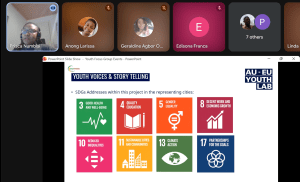
Discussions showed that, while all 17 SDGs are interconnected, the project focuses on eight priority goals were well perceived and agreed by the youth for future engagements. The stories shared revealed how youth experiences cut across several of them:
Barriers to Youth Engagement
Through interactive Slido exercises, participants identified several barriers that hinder youth involvement in SDG-related initiatives:
These obstacles reflect the broader systemic issues that prevent marginalized youth from fully participating in sustainable development efforts.
Inclusion of Marginalized Groups
Discussions emphasized that marginalized communities, including migrants, disabled persons, and women, remain underrepresented in SDG dialogues. Participants stressed that inclusive design benefits everyone, not just specific groups. For example, accessibility features like ramps serve not only wheelchair users but also parents with strollers and elderly individuals.
Despite these insights, participants expressed dissatisfaction with the current level of representation for marginalized groups, calling for stronger commitments to equity and inclusion.

Conclusion
In summary, most participants felt neutral on SDG development in Ghent and Belgium as a whole. The event was well attended by about 22 youth and young persons, representing the city of Ghent and other cities in Belgium (Hasselt, Brussels, Antwerp).
As follow up to this discussion, a youth stakeholder event will be held on 21 November 2025 at Cultuurhuis Merelbeke, Driekoningenplein 15, 9820 Merelbeke-Melle. This event will build on the discussion points above, together with existing policies and regulations, and best practices from Stakeholder organisations implementing the SDGs in Belgium. Both Youth and Stakeholders will collaborate in working sessions to share and enhance perspectives, while building strong collaborations for future empowerment and Inclusion.